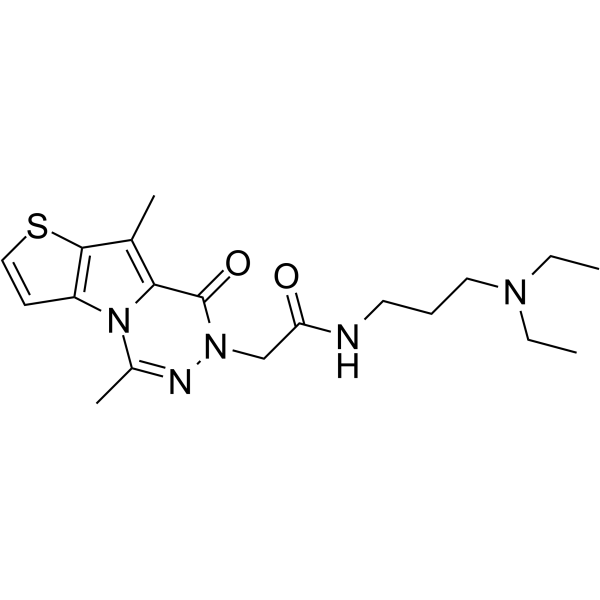
UHRF1
Ubiquitin-like with PHD and RING finger domains 1 (UHRF1) functions as a multidomain epigenetic regulator coordinating DNA methylation, histone modifications, and protein ubiquitination[1][2]. Mechanistically, UHRF1 interacts with DNMT1 to maintain DNA methylation during replication and recruits histone-modifying enzymes, ensuring stable epigenetic silencing of target genes[3][4][5]. Through these interactions, UHRF1 regulates cell cycle progression, redox homeostasis, and chromatin accessibility in diverse cell types, including vascular smooth muscle cells (VSMCs) and retinal cells[6][7][8]. Compared with UHRF2, UHRF1 uniquely maintains daughter strand DNA methylation and interacts with a broader set of epigenetic effectors, producing distinct functional outcomes[1][9]. In disease contexts, UHRF1 overexpression drives tumorigenesis in multiple cancers, promotes epithelial-mesenchymal transition in renal fibrosis, and mediates chemotherapy resistance via modulation of apoptotic and oxidative stress pathways[2][6][10][11][12][13][8]. In vascular pathology, UHRF1 controls VSMC plasticity by repressing cell cycle inhibitors and prodifferentiation genes, linking epigenetic regulation to cardiovascular remodeling[8]. Functionally, UHRF1 also suppresses retrotransposon activation and regulates innate immune responses, highlighting its epigenetic and non-DNA methylation-dependent roles[12]. For experimental applications, chemical inhibitors and small molecules targeting UHRF1’s SRA or RING domains have been used to modulate DNA methylation, gene expression, and apoptosis in cellular and animal models[14][15][16].
References:
- [1]. Unoki M, et al. The UHRF protein family in epigenetics, development, and carcinogenesis. Proc Jpn Acad Ser B Phys Biol Sci. 2022;98(8):401-415. [Content Brief]
- [2]. Lin S, et al. UHRF1/DNMT1-MZF1 axis-modulated intragenic site-specific CpGI methylation confers divergent expression and opposing functions of PRSS3 isoforms in lung cancer. Acta Pharm Sin B. 2023 May;13(5):2086-2106. [Content Brief]
- [3]. Kim JK, et al. UHRF1 downmodulation enhances antitumor effects of histone deacetylase inhibitors in retinoblastoma by augmenting oxidative stress-mediated apoptosis. Mol Oncol. 2020 Feb;14(2):329-346. [Content Brief]
- [4]. Chen X, et al. Overexpression of UHRF1 promoted the proliferation of vascular smooth cells via the regulation of Geminin protein levels. Biosci Rep. 2019 Feb 26;39(2):BSR20181341. [Content Brief]
- [5]. Zhang Y, et al. UHRF1 regulates AR ubiquitination to promote the loss of AR signaling and enzalutamide resistance in progression of prostate cancer. Cell Death Dis. 2026 Feb 27;17(1):286. [Content Brief]
- [6]. Wang X, et al. UHRF2 accumulates in early G1-phase after serum stimulation or mitotic exit to extend G1 and total cell cycle length. Cell Cycle. 2024 Mar;23(5):613-627. [Content Brief]
- [7]. Li HG, et al. Uhrf1 regulates H3K9me2 modification of mTOR to inhibit the effect of autophagy in myocardial ischemia-reperfusion injury. Aging (Albany NY). 2021 Mar 19;13(7):9704-9718. [Content Brief]
- [8]. Yang L, et al. UHRF1 promotes epithelial-mesenchymal transition mediating renal fibrosis by activating the TGF-β/SMAD signaling pathway. Sci Rep. 2025 Jan 27;15(1):3346. [Content Brief]
- [9]. Kim A, et al. Oncogenic Roles of UHRF1 in Cancer. Epigenomes. 2024 Jul 1;8(3):26. [Content Brief]
- [10]. Choudhry H, et al. Targeting microRNA/UHRF1 pathways as a novel strategy for cancer therapy. Oncol Lett. 2018 Jan;15(1):3-10. [Content Brief]
- [11]. Elia L, et al. UHRF1 epigenetically orchestrates smooth muscle cell plasticity in arterial disease. J Clin Invest. 2018 Jun 1;128(6):2473-2486. [Content Brief]
- [12]. Alhosin M, et al. Signalling pathways in UHRF1-dependent regulation of tumor suppressor genes in cancer. J Exp Clin Cancer Res. 2016 Nov 14;35(1):174. [Content Brief]
- [13]. Li J, et al. Activated MEK/ERK Pathway Drives Widespread and Coordinated Overexpression of UHRF1 and DNMT1 in Cancer cells. Sci Rep. 2019 Jan 29;9(1):907. [Content Brief]
- [14]. Peng Y, et al. PLK1 maintains DNA methylation and cell viability by regulating phosphorylation-dependent UHRF1 protein stability. Cell Death Discov. 2023 Oct 3;9(1):367. [Content Brief]
- [15]. Alhosin M, et al. Induction of apoptosis by thymoquinone in lymphoblastic leukemia Jurkat cells is mediated by a p73-dependent pathway which targets the epigenetic integrator UHRF1. Biochem Pharmacol. 2010 May 1;79(9):1251-60. [Content Brief]
- [16]. Irwin RE, et al. The UHRF1 protein is a key regulator of retrotransposable elements and innate immune response to viral RNA in human cells. Epigenetics. 2023 Dec;18(1):2216005. [Content Brief]
-
UHRF1 Related Products (1)
Related Products (1)